

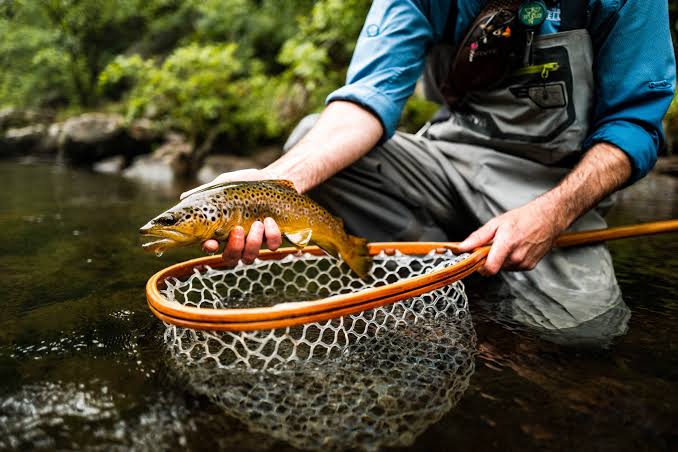
Why relocate each season?
Movement happens because each season alters flow, temperature, food supply, and oxygen, pushing the quarry toward stretches that keep feeding efficiently while costing little energy. Position in any stream is never fixed; it follows conditions.
Anglers who study rivers closely, including observers such as Stephen Gleave Ancaster, note that seasonal movement follows recognisable features rather than random wandering. Spring flows push resident populations toward softer edges and inside bends where the current slackens enough to hold. Summer heat draws them into deeper runs, shaded banks, and any inflow of cooler current entering the main channel. Autumn sees them drifting over gravel stretches as spawning instinct builds, while winter sends them into slow, deep pools where holding position demands almost nothing. Reading these shifts means reading the river itself. A feature crowded with feeders in June may sit empty by November, and the reverse proves equally true on many streams.
Which spots hold them?
Holding zones combine three elements at once. Current delivers drifting food, nearby cover offers protection, and a cushion of slower flow lets an individual rest while it feeds. Seams where fast and slow currents meet stay productive through much of the year because insects concentrate along them. Which specific lie earns attention depends heavily on the calendar, and a spot ignored in one month often turns dependable weeks later.
- Boulder pockets break heavy current and create resting slots during high spring flows.
- Undercut banks provide shade in summer and shelter whenever levels rise.
- Tailouts of pools gather feeders in autumn as gravel draws them upstream.
- Deep bellies of pools hold winter populations where flow barely moves.
Oxygen and temperature
Cold currents carry more dissolved oxygen, which explains why the species tolerates broken riffles in July but slides away entirely once January arrives. As summer builds, movement runs toward riffle heads, plunge pools below small drops, and places where springs or tributaries introduce cooler flow. Such features act like magnets once mainstream temperatures climb past comfortable levels.
Winter reverses this pattern completely. Oxygen becomes plentiful throughout the channel, so temperature stability takes over as the deciding feature. Deep pools warm and cool slowly, sheltering residents from daily swings, and they gather there in numbers that surprise anyone who casts only during warm months.
Cover through changing flows
Cover shifts with height as much as with season. A submerged log that shelters an individual at summer levels may sit high and dry in late autumn, while flooded grass margins appear only during spring spates and vanish within weeks. Trout track this moving shelter constantly, which is why bankside observation before casting often reveals more than any map.
Overhead protection carries particular weight in low, clear conditions. Tree canopies, foam lines, and broken surface all reduce visibility from above, letting the quarry feed with confidence. When flows drop in late summer, even a narrow band of shade along one bank can concentrate nearly the whole catchable population in a stretch.
Seasonal change never empties a river of its stock; it simply redistributes the fish along stretches that answer immediate needs. Watching how current, warmth, aeration, and shelter interact across the year turns scattered casts into deliberate ones, and rewards anyone who treats each visit as a fresh reading of familiar water rather than a repeat of the last.